
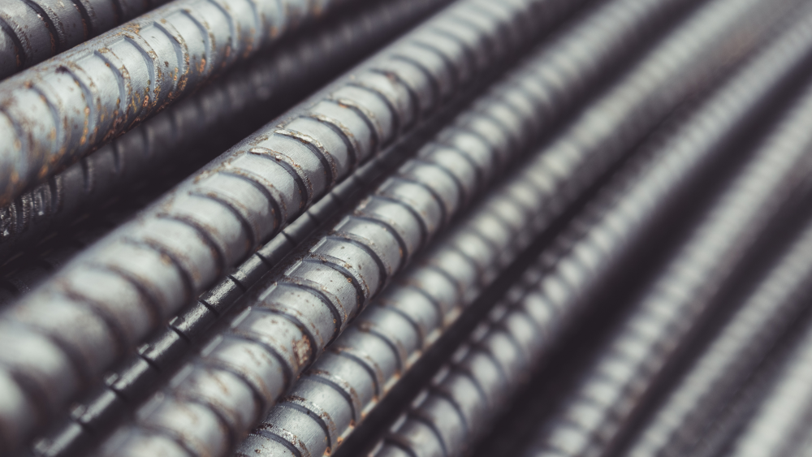
When working on an existing slab or foundation, you’ve got two options: epoxy or mechanical anchors. Both get rebar and threaded rod into concrete. Beyond that, they work very differently, and grabbing the wrong one can cost you a re-drill, a failed inspection, or worse. If you’re working with concrete supply companies in Mendocino County, knowing which anchor system fits the job before you order saves time and headaches.
Epoxy anchors (sometimes called adhesive or chemical anchors) secure rebar, threaded rod, or dowels into drilled holes using a two-part resin system. You inject the epoxy, insert the rod, let it cure, and the chemical bond locks the rod into the concrete matrix.
The load transfers through the bond itself, not through expansion pressure against the hole walls. However, one thing worth knowing: epoxy requires clean, dry holes. Dust-contaminated or wet boreholes kill adhesion.
Mechanical anchors get their grip through expansion or friction. Wedge anchors, sleeve anchors, and drop-in anchors are the most common types on concrete jobs. You drill, set the anchor, and torque it down, then the expansion mechanism wedges against the hole walls and locks in place.
They’re fast, and they don’t require a cure window, which makes them the go-to when you need the connection loaded quickly. However, mechanical anchors are more sensitive to edge distance, concrete strength, and whether the base material has any cracking. They can also lose capacity if over-torqued during installation.
FEATURE | EPOXY ANCHORS | MECHANICAL ANCHORS |
Load Transfer Method | Chemical bond to concrete | Friction/expansion against hole wall |
Cracked Concrete Rating | Yes, rated systems available | Generally, not recommended |
Edge Distance/Spacing | Tighter tolerances allowed | Larger margins typically required |
Install Speed | Slower, cure time required | Fast, load immediately after torque |
Best Application | Structural, rebar, high-load | Non-structural, hardware, brackets |
Adjustability | None, permanent once cured | Some types are removable |
Typical Cost | Higher upfront | Lower upfront |
The biggest practical difference: if the concrete is cracked or the project involves post-installed rebar and dowels, epoxy is the system that holds up under load. Mechanical anchors are the faster, lower-cost option when base material and load conditions support it.
Getting the anchor wrong can cause a structural problem. In Northern California’s seismic zone, post-installed anchors often need to meet specific ICC-ES ratings, which means the product and installation method both matter.
On inspected jobs (municipal work, commercial site improvements, anything touching public infrastructure) inspectors will ask what you used and how you installed it.
Two other factors that catch contractors off guard:
Stevenson Supply & Tractor Co. stocks epoxy for concrete anchoring; for rebar, threaded rod, dowels, and structural hardware. Our team knows the difference between a product that works for crack repair and one rated for structural anchoring, and we’ll point you to the right one for your application.
When you’re working across Mendocino County and need to move fast, pickup is available at our Santa Rosa location. No waiting on a big-box transfer order or talking to someone who’s never been on a concrete job.
Safety note: Always wear appropriate PPE when drilling into concrete, respiratory protection for silica dust, eye protection, and hearing protection. Follow OSHA silica exposure guidelines for any drilling work.
If you’re working on slabs, foundations, or structural connections in Mendocino County and need epoxy for anchoring rebar or threaded rod, stop by or give us a call. We stock what contractors actually use and can help you select the right product for your conditions, without the runaround.
Reach out to Stevenson Supply & Tractor Co today!
📞 Call us: (707) 575-3335
Epoxy anchors use a two-part resin to chemically bond rebar or threaded rod to the concrete. Mechanical anchors use friction and expansion to grip the hole walls. Epoxy generally handles higher loads, cracked concrete, and tighter spacing conditions. Mechanical anchors install faster and work well in solid uncracked concrete for non-structural connections.
Most standard expansion and wedge anchor systems are not rated for cracked concrete. If the base material has visible cracking, or you’re working in a seismic zone where cracking under load is a design consideration, you typically need a rated adhesive anchor system. Check the product’s ICC-ES listing to confirm.
Cure time depends on the product formulation and ambient temperature. Most systems need anywhere from 30 minutes to several hours at typical temperatures, cold mornings extend that considerably. Load the anchor before full cure and you compromise the bond. The product’s technical data sheet will give you the range for your specific temperature conditions.
Stevenson Supply stocks epoxy for anchoring rebar, threaded rod, and dowels in concrete, for structural and non-structural applications. We also carry concrete form stakes, installation tools, and general concrete job supplies. Stop by our Santa Rosa location or call (707) 575-3335 to confirm availability for your specific application.
If you’re working from engineered drawings, the structural notes or connection details will typically call out anchor type, embedment depth, and product category, sometimes referencing ICC-ES listings directly. On municipal or inspected work, don’t substitute anchor types without confirming with the engineer of record. If you’re not sure what a spec is calling for, bring it in and we can help you read it.

President/CEO
Kent Stevenson is the owner and president of Stevenson Supply & Tractor Co., a family-owned equipment and supply company serving Sonoma County and the North Bay agricultural community since 1967. Under Kent’s leadership, the company has expanded from a small tractor dealership into a trusted regional provider of agricultural equipment, hardware, fencing, and repair services.
Kent is known for his deep agricultural knowledge, hands-on approach, and commitment to serving the local farming and vineyard community. His business philosophy blends old-fashioned service with modern efficiency, ensuring every customer—from homeowners to commercial growers—receives honest guidance and reliable equipment solutions.
Stevenson Supply continues to reflect the values Kent grew up with: hard work, integrity, and dedication to supporting the people who keep Sonoma County growing.