
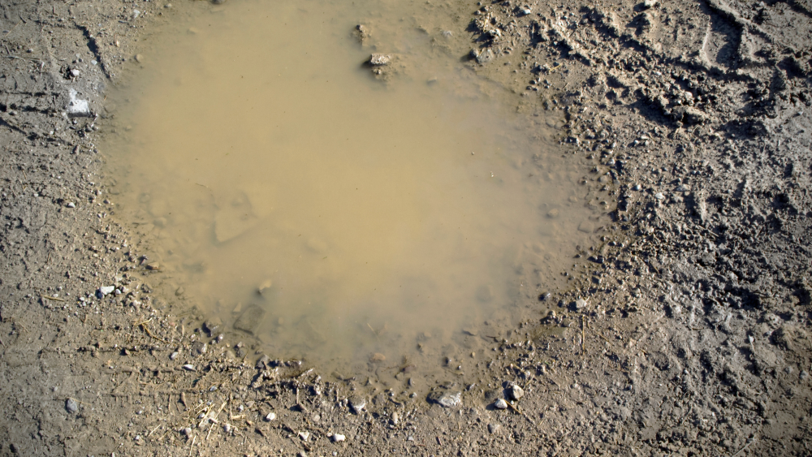
Water shows up in a trench overnight, and the crew that was supposed to set forms at 7 AM is standing around looking at it. This is when you need to know how to get the water out fast and what the rules are before that water goes anywhere.
Here’s our full guide to construction dewatering, along with the compliance side that catches people out. Water leaving a job site is regulated, and where it goes matters as much as how you move it.
Dewatering is the controlled removal of water from an excavation, trench, or work area so crews can dig, set forms, lay pipe, or pour on ground that isn’t saturated.
Usually, this water comes from 2 places. Groundwater seeps in from below once you dig past the water table. Surface water runs in from rain, a broken line, or runoff from the rest of the site.
Both are handled the same way at a basic level: pull the water out, clean the area, and put it somewhere legal. The details change depending on how much water you have, how long you’ll be pumping, and how much sediment is in it.
Quick note: Dewatering is not the same as drainage design. Drainage is permanent infrastructure. Dewatering is temporary, active, and lasts only as long as the excavation is open.
Most contractors run into this on 4 kinds of work.
Open a trench below the water table and it fills. Saturated trench walls also behave differently than dry ones, which changes your shoring plan and your soil classification.
You can’t pour concrete into standing water and expect the mix design to hold. Water in a footing excavation has to come out before the pour, and the excavation has to stay dry long enough for the truck to show up.
Anything deep enough to intercept groundwater needs active pumping for the duration of the work, not a one-time cleanout.
Sonoma, Solano, Marin, and Mendocino County sites see the bulk of their rain between October and April. A site that was dry in September can hold water in every low spot by December. Winter grading and utility work here almost always includes a dewatering plan, and the same rain filling your excavation is what your erosion control BMPs are there to handle.
This is the part that costs contractors money.
Water pumped off a construction site is a discharge. On sites covered by California’s Construction General Permit, that discharge falls under your Stormwater Pollution Prevention Plan (SWPPP), and it has conditions attached.
What inspectors look at:
Requirements vary by risk level, receiving water, and municipality. Confirm yours with your QSD or QSP and the agency with jurisdiction over the site before you start pumping.
Every setup, from a single sump in a footing to a multi-week trench operation, has the same 3 pieces.
The pump and its intake. Sizing depends on how fast water enters the excavation, the lift height, and how long you need to run.
Straight answer on this one: Stevenson Supply doesn’t stock pumps, well points, or discharge hose. That side of the job comes from a rental yard or pump supplier. What the team can do is make sure the water coming out of that pump is handled correctly, which is the part that gets flagged on inspection.
Where the sediment comes out. A dewatering bag is the common answer: a sewn filter fabric bag that the discharge hose feeds into, holding sediment inside while filtered water passes through the fabric.
Sizing matters here. A bag matched to a pump that outflows faster than the fabric can pass water will balloon, bypass, or fail. Match the bag to the pump output and the expected duration of the job.
Where the filtered water lands. Setting the bag on a gravel bed, a vegetated area, or a stabilized surface lets the outflow spread and slow down instead of cutting a channel. The discharge point should be somewhere the water can infiltrate or travel without picking sediment back up on the way.
The products that make the compliance side work are the same erosion and sediment control materials already specified in most SWPPPs.
Safety note: Standing water changes soil behavior in an excavation. Cave-in risk goes up in saturated ground. Follow Cal/OSHA trenching and excavation requirements and your competent person’s direction before anyone enters.
If you’ve got a wet excavation coming up, the team at Stevenson Supply & Tractor Co. can walk through the site conditions with you and put together the filtration and sediment control side of the setup. We offer job assessment for erosion and sediment control, plus delivery throughout Sonoma, Solano, Marin, and Mendocino Counties.
Reach out to Stevenson Supply & Tractor Co today!
📞 Call us: (707) 575-3335
Usually some form of authorization applies, though what it looks like depends on your site. Most construction sites are already covered by the Construction General Permit and its SWPPP requirements, and some discharges need separate authorization from the Regional Water Quality Control Board or the local agency. Check with your QSD or QSP and the jurisdiction over your site before you discharge.
Not without confirming it’s allowed and the water meets the conditions in your permit. Storm drains carry directly to creeks and the Bay in most Bay Area jurisdictions, so sediment-laden water going in untreated is a common violation. Filtration through a properly sized dewatering bag is the minimum, and the discharge location still has to be approved.
No. The pump, well points, and discharge hose come from a rental yard or pump supplier. Stevenson Supply stocks the filtration and containment side: dewatering bags, gravel bags, snake bags, sandbags, silt fence, wattles, and erosion control blankets.
Start with the pump’s output in gallons per minute, then factor in how long you’ll run it and how much sediment the water is carrying. A bag that can’t pass water as fast as the pump delivers it will balloon and bypass. Call either location with your pump specs and site conditions and the team can help you match it.

President/CEO
Kent Stevenson is the owner and president of Stevenson Supply & Tractor Co., a family-owned equipment and supply company serving Sonoma County and the North Bay agricultural community since 1967. Under Kent’s leadership, the company has expanded from a small tractor dealership into a trusted regional provider of agricultural equipment, hardware, fencing, and repair services.
Kent is known for his deep agricultural knowledge, hands-on approach, and commitment to serving the local farming and vineyard community. His business philosophy blends old-fashioned service with modern efficiency, ensuring every customer—from homeowners to commercial growers—receives honest guidance and reliable equipment solutions.
Stevenson Supply continues to reflect the values Kent grew up with: hard work, integrity, and dedication to supporting the people who keep Sonoma County growing.