
Steel vs. Iron Concrete Form Stakes

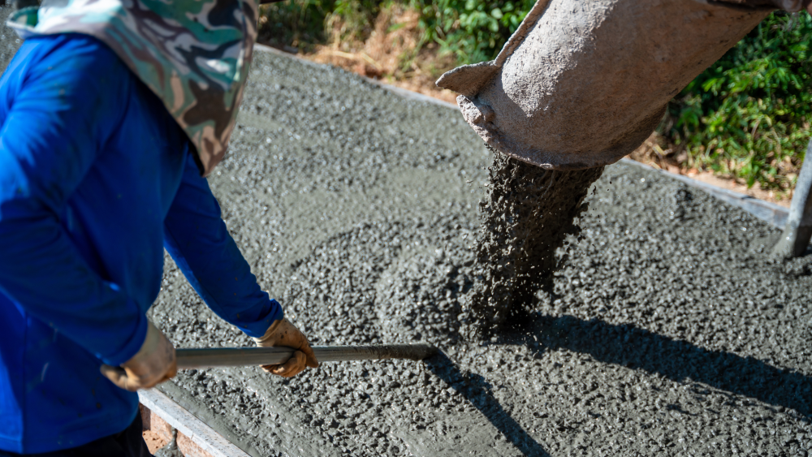
A worker in blue uses a tool to spread thick concrete as it pours from a truck.

Every flatwork crew has been there: the forms are set, the pour is scheduled, and one bent stake threatens the whole line. If you’ve searched for concrete supply store near me in Marin County, you’ve probably noticed most counters carry two kinds of form stakes: steel and iron. They look similar on the rack. In the ground, they behave differently. Here’s where each one holds up, and where it doesn’t.

Key Takeaways

  • Steel form stakes are lighter and faster to drive, the better pick for standard flatwork like sidewalks and driveways in typical Bay Area soil.
  • Iron form stakes are heavier and more rigid, and they hold their line in compacted or rocky ground and under heavier wall or curb pours.
  • Most crews carry both on the truck: steel for the bulk of the job, iron for the sections where the ground pushes back.

Steel Form Stakes: Where They Win

Steel form stakes are the workhorse for standard flatwork. They’re light enough to carry a full armload at once, quick to drive with a hand sledge, and punched with regular holes for double-headed nails, so adjusting form height takes seconds instead of a re-drive.

  • Lower weight per stake means more stakes per bundle on the truck without pushing your payload.
  • Punched holes at regular intervals speed up nailing and height adjustments.
  • Easy to pull, straighten, and reuse across pours, as long as they aren’t forced into rock or hardpan.
  • Well suited to graded, workable soil, which covers most sidewalk, driveway, and slab-edge runs in the region.

Iron Form Stakes: Where They Win

Iron form stakes trade speed for rigidity. The heavier gauge resists bending when the ground includes rock, base rock, or compacted subgrade, which is common on curb, gutter, and wall forms where a blowout is expensive to fix mid-pour.

  • Heavier gauge holds a line under the pressure of a full, heavy pour.
  • More resistant to bending in compacted or rocky ground than a lighter steel stake.
  • Fewer bent stakes mid-job means fewer walks back to the truck.
  • Better suited to curb and gutter work and wall forms than to long flatwork runs.

The tradeoff: iron stakes weigh more to carry and take more effort to drive by hand.

Side-by-Side Comparison

Feature

Steel Form Stakes

Iron Form Stakes

Weight per stake

Lighter

Heavier

Reuse life

Many pours if not bent

Many pours, more resistant to bending

Cost per stake

Typically lower upfront

Typically higher upfront

Driving effort

Low to moderate

Moderate to high

Best ground

Graded, workable soil, typical Bay Area clay

Compacted, rocky, or base-rock ground

Best use

Sidewalks, driveways, slab edges

Curbs, gutters, wall forms, heavier pours

Steel usually wins on a standard flatwork job because you’re driving dozens of stakes and speed matters. Once the ground gets rocky or the pour gets heavier, that speed advantage disappears if the stakes bend, and iron costs less over the job because you replace fewer of them.

How Many Stakes Per Linear Foot

Spacing depends on form height, pour depth, and the engineer’s spec for the job, so treat these as a starting point, not a substitute for the plan set.

Application

Typical Spacing

Sidewalk

Every 3 to 4 feet, tighter on curves

Curb and gutter

Every 2 to 3 feet

Driveway

Every 3 to 4 feet, 2 feet at corners and joints

Slab edge

Every 3 to 4 feet

Safety Note: an understaked form is one of the most common causes of a mid-pour blowout. When the ground is questionable or the spec is unclear, add a stake rather than stretch the spacing.

Buying in Bundles: Why Contractors Pick Up in Quantity

Most crews order stakes by the job, not by the piece. A mid-pour supply run costs more in time than the stakes are worth, and buying the full run at once keeps every stake on the job the same gauge and length, which matters when you’re setting grade off them.

Stevenson Supply stocks both steel and iron form stakes for pickup at the Santa Rosa and Vallejo counters. If you’re searching for concrete suppliers near me in Marin County, both locations serve Marin along with Sonoma, Solano, and Mendocino Counties.

What to Do Next

Walk the ground. Note whether it’s loose, compacted, or rocky before you order stakes.
Match the stake to the pour. Steel for standard flatwork runs, iron for curb, wall, or rocky sections.
Order by the job, not the stake. Call ahead so the counter can pull a full bundle for pickup.

Safety Note: an understaked form is one of the most common causes of a mid-pour blowout. When in doubt, add stakes.

Ask About Bundle Quantities for Your Next Pour

Every job’s ground is a little different, and the crew at the counter can help you sort out how much of each stake type to load for your specific run. Stop by Stevenson Supply before your next pour, or call ahead so your order is pulled and ready.

Reach out to Stevenson Supply & Tractor Co today!

🌐 Contact us online

📞 Call us: (707) 575-3335

💲 Get an Estimate

Frequently Asked Questions

What's the single biggest difference between steel and iron form stakes?

Weight and rigidity. Steel is lighter and faster to drive, which suits standard flatwork. Iron is heavier and holds its shape better in rocky or compacted ground, which suits curb, gutter, and wall forms.

Are iron form stakes more expensive than steel form stakes?

Iron typically costs more per stake upfront. On a job where the ground bends steel stakes, iron often costs less overall because you aren’t replacing bent stakes mid-pour.

How do I know which stake type is right for my job?

Start with the ground. Graded, workable soil favors steel. Compacted, rocky, or base-rock ground favors iron. Many jobs use both: steel for the long runs, iron for the sections where the ground fights back.

Do form stakes wear out, and how long do they last?

Both types can be reused across multiple pours if they’re pulled carefully and not bent or badly rusted. A stake that bends on driving or won’t hold a nail hole cleanly is due for replacement.